
Why Professional Water PERC Testing is Essential for Your Northern Nevada Build
Are you planning to build your dream home on a rural lot in Washoe County? Or perhaps you are a developer mapping out a new subdivision near Sparks? Before you can break ground, pour a foundation, or map out utility lines, there is a crucial, invisible factor you must account for: your soil’s ability to absorb water. [1]
In Northern Nevada, understanding your land’s drainage capacity isn’t just best practice—it is a critical legal and structural requirement. At Carnes Engineering, we specialize in providing precise Water Percolation (PERC) Testing services across Reno, Sparks, and Washoe, Storey, and Lyon Counties. [2, 3, 4, 5]
Here is a closer look at what a PERC test entails, why local geological expertise matters, and how we help keep your project moving forward smoothly. [1, 5]
What is a Water PERC Test?
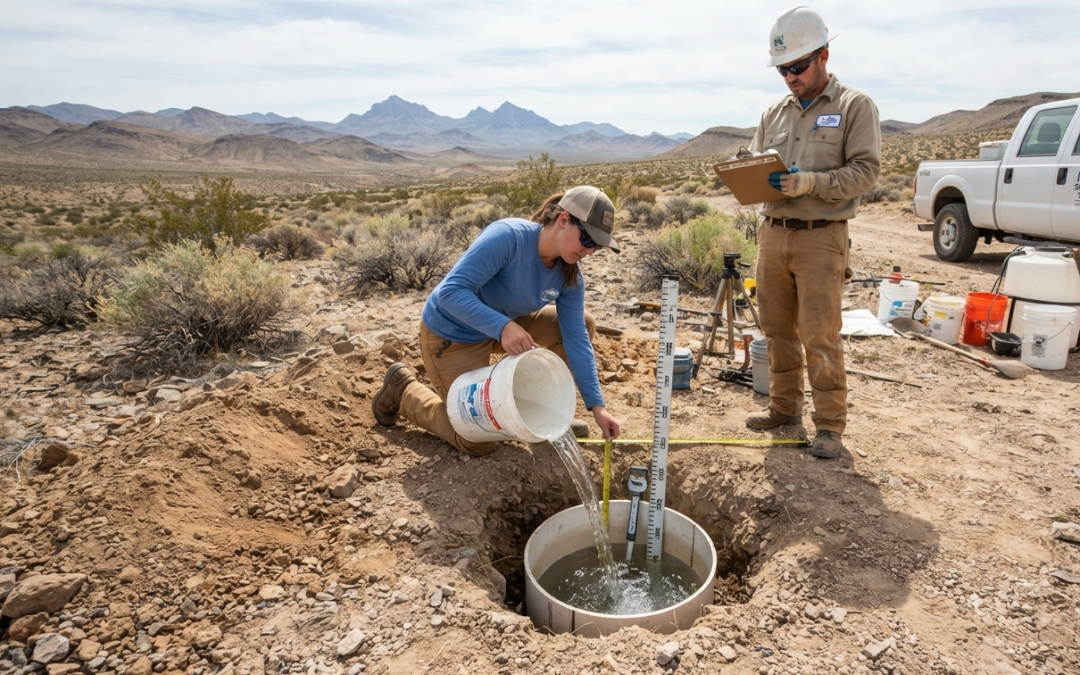
A water percolation test measures how quickly water drains or “percolates” through the soil on a specific piece of property. [6]
The physical process is highly scientific and rigorous: [3]
- Digging Test Holes: A civil engineer digs a series of standardized holes at the exact depth and location of your proposed septic leach field. [3]
- Pre-Soaking the Soil: The holes are pre-soaked with water ahead of time to simulate a fully saturated, real-world operational environment. [3, 7]
- Measuring Absorption Rates: Clean water is added, and the rate of fall is precisely tracked over fixed intervals. The final data is calculated in minutes per inch (MPI). [3]
The Stakes: Why Local Expertise Matters in Reno
Northern Nevada’s landscape is incredibly diverse. Over a span of just a few miles, properties can shift from rocky high-desert terrain and heavy, impermeable clay to lakebed silt and highly absorbent sand. [6]
This extreme variability directly impacts your project in several key areas:
- Septic System Design: Traditional septic systems require a balanced soil absorption rate. If your soil drains too slowly (common with heavy clays), you risk septic failure, pooling water, and environmental contamination. If it drains too quickly (common with coarse sand), wastewater can bypass natural filtration and threaten local groundwater sources. [4, 6, 8, 9]
- Regulatory Compliance: Regulatory bodies in Washoe, Storey, and Lyon Counties enforce strict guidelines regarding permit approvals. A certified civil engineer must perform and document these tests to ensure your environmental compliance documentation stands up to county scrutiny. [1, 2, 4, 5]
- Financial Protection: Discovering that your land cannot handle a conventional septic system after you have designed a home layout can lead to thousands of dollars in structural redesigns, alternative system engineering, or site remediation. [4, 6]
What Happens If Your Land “Fails” a PERC Test?
A “failed” PERC test doesn’t mean your property is unbuildable; it simply means a standard, gravity-fed septic system isn’t the right fit. [4, 10]
As a full-service civil engineering firm, Carnes Engineering doesn’t just deliver data—we deliver solutions. If your soil presents challenging drainage dynamics, Chad and our engineering team can design custom alternative wastewater options, including: [2, 4]
- Engineered sand filters or mound systems
- Aerobic wastewater treatment units
- Advanced soil amendments and optimized site grading [4, 11]
Build on Solid Ground with Carnes Engineering
Don’t leave the foundational safety and regulatory approval of your property to guesswork. Work with a local team that possesses a deep familiarity with Reno-area geology, changing water tables, and evolving county environmental regulations. [5]
Ready to secure your septic permits and keep your development project on track?
Contact Carnes Engineering Today:
- Phone: (775) 997-3862
- Email: CrnsConsulting@aol.com
- Office Address: 9581 Long River Drive, Reno, Nevada 89506 [5, 8]
Would you like to add specific details to this draft, such as a breakdown of current county turn-around times for permits, or look into pricing variables for Northern Nevada soil testing?
[10] https://landperc.com
[11] https://www.angi.com